
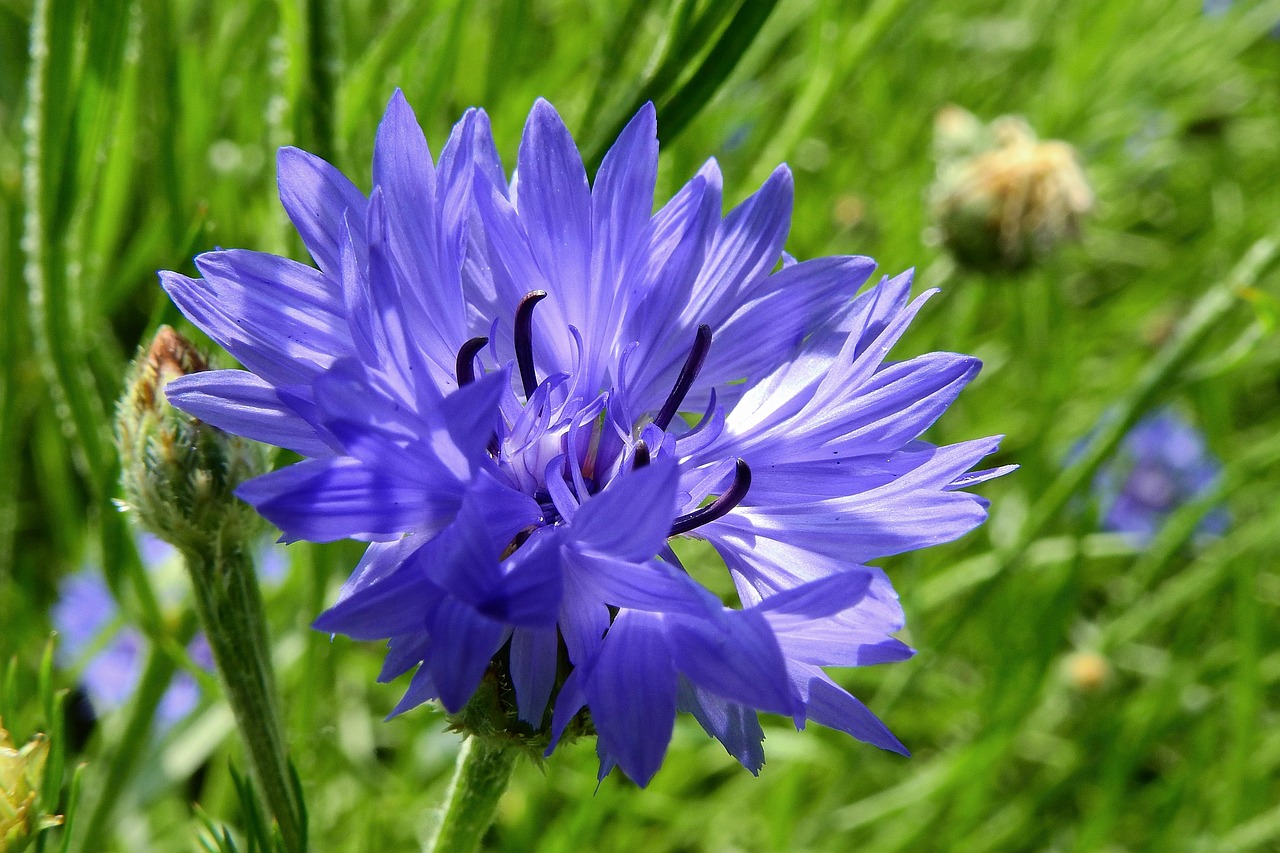
The cornflower also known as Centaurea cyanus , is an annual flowering plant. The plant grows to 20-100cm tall and lance-shaped leaves that are 1-4cm long. Cornflower tea is known as for its anti-inflammatory properties. The flowers are also used as a natural dye, giving fabrics a beautiful blue color.
How to grow cornflowers:
Step 1: Choose a Location
- Full sun: Cornflowers need full sun to grow well.
- Well-draining soil: Choose a spot with well-draining soil to prevent waterlogged soil.
Step 2: Prepare the Soil
- Add compost: Mix in some compost to improve soil fertility.
- Remove weeds: Remove any weeds or debris from the area.
Step 3: Sow Seeds
- Sow in spring: Sow seeds in early spring, about 1-2 inches deep.
- Space seeds: Space seeds 6-12 inches apart.
Step 4: Water and Maintain
- Keep soil moist: Keep the soil consistently moist during the first few weeks.
- Deadhead: Remove spent flowers to encourage more blooming.
Step 5: Support Tall Stem
- Use stakes: Use stakes to support tall stems and prevent them from falling over.
Tips and Variations:
- Sow in containers: Cornflowers can also be grown in containers.
- Use as a cut flower: Cornflowers make great cut flowers and can be used in arrangements.
- Attract pollinators: Cornflowers attract pollinators like bees and butterflies.
How to Care for Cornflowers
Planting:
- Choose a sunny spot: Cornflowers love sunshine, so pick a spot that gets lots of sun.
- Make the soil happy: Add some compost or manure to the soil to make it healthy and fertile.
- Plant the seeds: Plant the seeds directly in the ground in spring or early summer.
Watering:
- Keep the soil moist: Cornflowers need water, but don’t overdo it!
- Water deeply: Water the plants once or twice a week, depending on the weather.
Feeding:
- Give them a balanced snack: Use a special fertilizer that’s good for plants.
- Don’t overfeed: Don’t give them too much food, or they might get weak.
Pruning:
- Remove old flowers: Take off the old flowers to help the plant make new ones.
- Cut back the stems: Cut the stems back a bit after the flowers are gone.
Pest and Disease Control:
- Watch for bugs: Keep an eye out for aphids and whiteflies, and use special soap to get rid of them.
- Check for sickness: Look for powdery mildew and treat it with special medicine.
Tips
- Support tall stems: Use sticks or a special helper to keep the tall stems from falling over.
- Mulch around plants: Put some mulch around the plants to keep them happy and healthy.



Reviews
There are no reviews yet.